
December 18, 2025
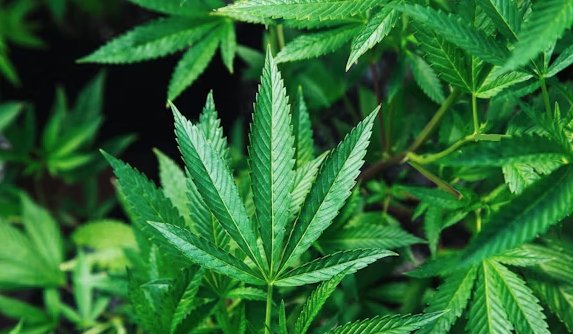
A recent major change to US hemp regulations has the potential to severely impact the fast growing $28 billion U.S. cannabis industry.
A recent federal law, the “Continuing Appropriations, Agriculture, Legislative Branch, Military Construction and Veterans Affairs, and Extensions Act, 2026 (P.L. No. 119-37)”, has significantly tightened hemp regulations so much that it effectively bans most intoxicating hemp products currently on the market.
These changes – which will become effective on November 12, 2026 – primarily close the “Hemp Loophole” created by the 2018 Farm Bill:
Here are five important things you need to know about the regulations changes.
Re-defines hemp based on “total THC” content instead of only on Delta-9 THC. The new law changes the threshold for total THC content (including THCA, Delta-8 THC, Delta-10 THC, and all other isomers and analogs) to a concentration of no more than 0.3% on a dry weight basis. Previously, only Delta-9 THC was counted, allowing products with high levels of other psychoactive cannabinoids (natural or synthetic) to be considered legal hemp.
Imposes a new, strict “per-container” total THC limit. Individual consumer products will be limited to a maximum of 0.4 milligrams of total THC per container. This is an extremely low limit that will make most existing consumable hemp products (which often contain several milligrams of THC per serving in a multi-serving container), federally illegal.
Bans synthetic or manufactured cannabinoids: The new definition of hemp explicitly excludes any cannabinoid substances that are not naturally produced by the cannabis plant or is synthesized or manufactured outside the plant. This targets popular products like most Delta-8 and Delta-10 THC vapes and edibles.
Maintains the exclusion for natural industrial hemp: The law explicitly preserves the legal status of industrial hemp grown for non-cannabinoid uses, such as fiber, grain, and other edible hemp products (e.g., seeds, oil, nuts).
Not affected by the recent rescheduling of marijuana: These changes to Federal hemp regulations are coincident with but not affecte3d by the recent executive order rescheduling marijuana from a Schedule I to a Schedule III drug; it does not change or mitigate the new hemp regulations. (see our separate blog post discussing the rescheduling of marijuana.)
Taken together, these regulations have significant implications for hemp businesses.
Potential for major industry disruption: The changes have the potential to eliminate up to an estimated 95% of current intoxicating hemp products, impacting farmers, manufacturers, distributors and retailers.
Plan for the change:s Businesses can prepare for compliance by eliminating non-compliant products, reformulating products to be compliant, or, as state and local laws permit, transitioning into state-regulated cannabis markets.
The regulatory environment is changing: The Food and Drug Administration (FDA) has been directed to publish lists of naturally occurring cannabinoids and those with similar effects to THC, along with clarifying the definition of a “container,” within 90 days of the law’s enactment.
Potential for further changes: The regulations do not take effect until November 12, 2026. The hemp industry and its advocates are actively uniting to lobby Congress for new legislation to replace the bans with a more reasonable regulatory framework or to remove the bans completely before the November 12, 2026 effective date. Concerned industry members should contact their Representatives, Senators and industry trade associations.
Copyright © 2025, Softgel Source, LLC. All Rights Reserved.